

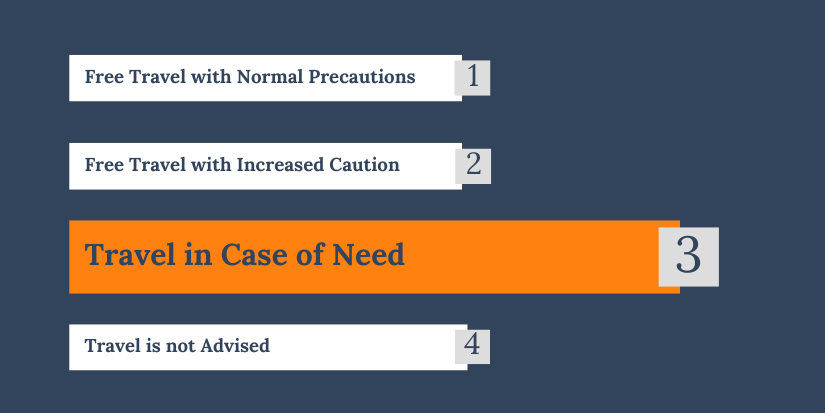
VISA REGIME
For holders of national passports and other travel documents: Visa required
For holders of diplomatic and official passports: Visa required
Note: Visa is required for the holder of an emergency travel document in transit
ENTERING AND LEAVING THE COUNTRY
Citizens of the Republic of Serbia are required to obtain a visa to enter Uganda.
Applications for all types of visas must be submitted online via the website https://visas.immigration.go.ug/ . Information on the required documents can be found at https://visas.immigration.go.ug/#/help/visa . The visa approval process takes two to three working days. Once the application has been approved, an e-visa approval letter containing a barcode will be sent to the email address provided during the application process. This letter must be printed and presented at the border crossing upon arrival in Uganda.
A single-entry visa and a transit visa for Uganda each cost USD 50. Multiple-entry visas valid for six or twelve months cost USD 100, while a two-year multiple-entry visa costs USD 200.
In the event of any problems with obtaining an entry visa, assistance may be sought from the Embassy of Uganda in Rome (website: https://rome.mofa.go.ug/ , email: consular.rome@mofa.go.ug).
As of May 2026, possession of a “yellow card” (proof of yellow fever vaccination) is no longer a requirement for submitting a visa application. However, the World Health Organization continues to strongly recommend vaccination to protect public health, given that Uganda is located in a yellow fever transmission zone.
The import and export of Ugandan shillings are prohibited, but there are no restrictions on bringing convertible currencies into the country. Travellers are permitted to bring in 200 cigarettes and one litre of alcoholic beverages. The export of live animals and products derived from protected animal species (such as skins, coral, ivory, etc.) is prohibited and may result in imprisonment.
SOCIAL SECURITY AGREEMENT
No social security agreement has been concluded.
USEFUL INFORMATION
HEALTH SITUATION — On 17 May 2026, the World Health Organization officially announced that an outbreak of Ebola virus disease caused by the Bundibugyo variant had been recorded in Uganda (Kampala). The last case of infection was registered on 16 June 2026, and the Ugandan Ministry of Health therefore declared the end of the outbreak on 28 July 2026.
Nevertheless, the outbreak in neighbouring Democratic Republic of the Congo (DRC) is still ongoing, and in October 2026, a case of infection was reported in Kenya involving a person who had arrived from Uganda. Therefore, additional precautions are still recommended when travelling to and staying in Uganda, particularly in the capital, Kampala, and in the border areas adjoining the DRC.
Before travelling, we recommend checking the latest health situation on the website of the World Health Organization’s Regional Office for Africa: www.afro.who.int/health-topics, as well as on the WHO website: www.who.int.
In addition to yellow fever, there is a risk of malaria in low-lying areas, as well as risks associated with insect and reptile bites, jaundice, hepatitis, cholera, amoebic infections, waterborne parasitic worms, etc. People who are not acclimatised may also experience altitude sickness.
Only bottled water should be consumed.
SECURITY SITUATION — In the capital city of Kampala, the security situation is stable and without major risks. There is a potential danger of theft, pickpocketing, fraud, and other minor crimes. Travel to the northern part of the country is not recommended because of the activities of rebel groups.
TRANSPORT — The main international airport ‘Entebbe’ is located in the capital city of Kampala. A narrow-gauge railway connects Kampala with the Kenyan border. The road network is poorly developed, and the use of off-road vehicles is recommended. Motor traffic is on the left-hand side, and cars can be rented from larger car rental companies.
OTHER INFORMATION — Travel to Uganda through travel agencies is recommended, while individual travel should be more thoroughly prepared and informed.
In Uganda, in addition to local languages, English is the most widely used language.
The national currency of Uganda is the Ugandan Shilling (UGX). It will be possible to use international payment cards (VISA, etc.), especially in good hotels, restaurants, supermarkets, etc. Only newer US dollar bills can be exchanged.
Contact information:
For consular assistance and protection while in Uganda, please contact the Embassy of the Republic of Serbia in Nairobi (address: 6th Floor, Fortis Tower, Wood Vale Grove, Westlands, Nairobi), via the following phone numbers: +254794588515; +254723163775; (for Serbian citizens in emergencies only: +254734601031) and email: srb.consular.kenya@mfa.rs.