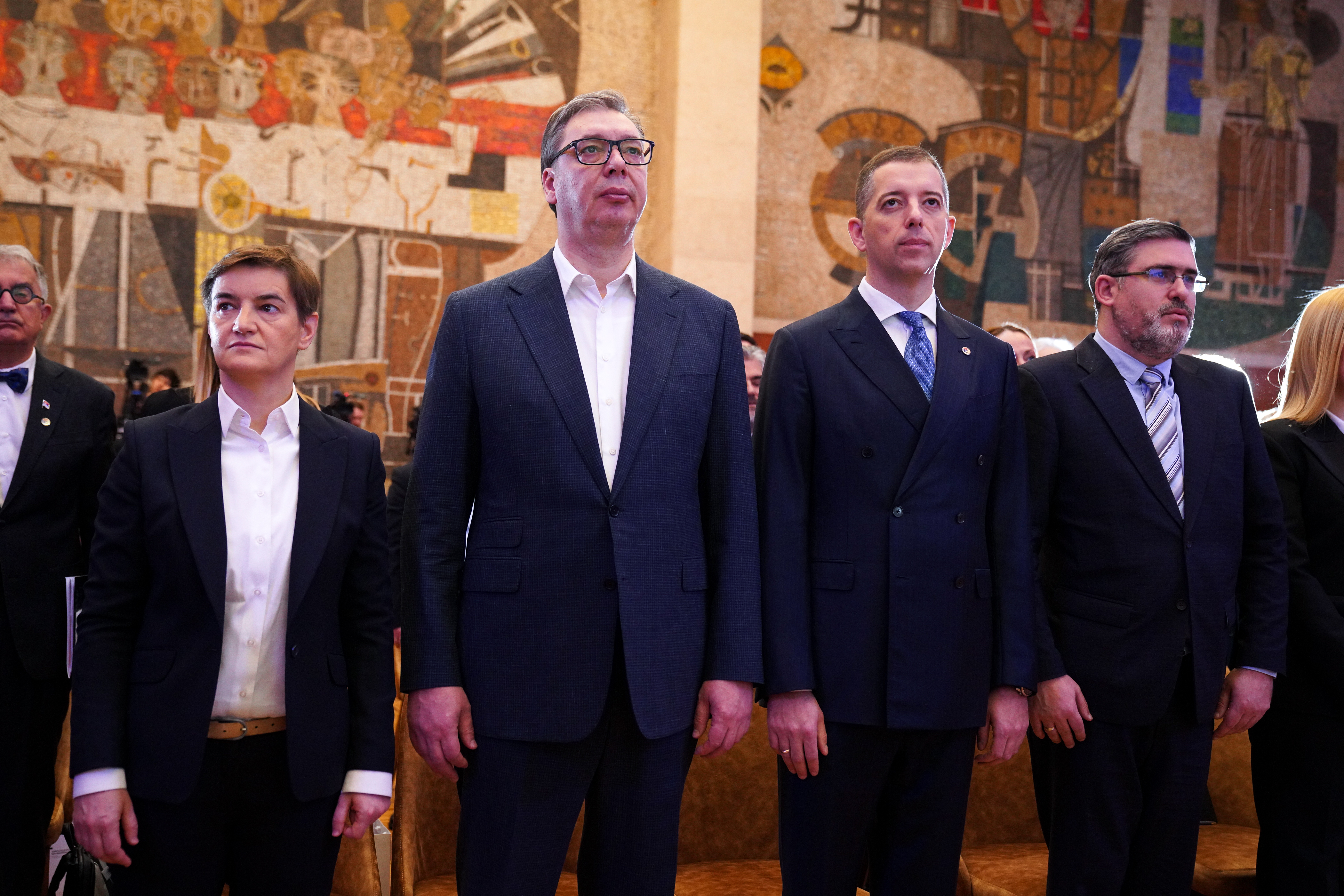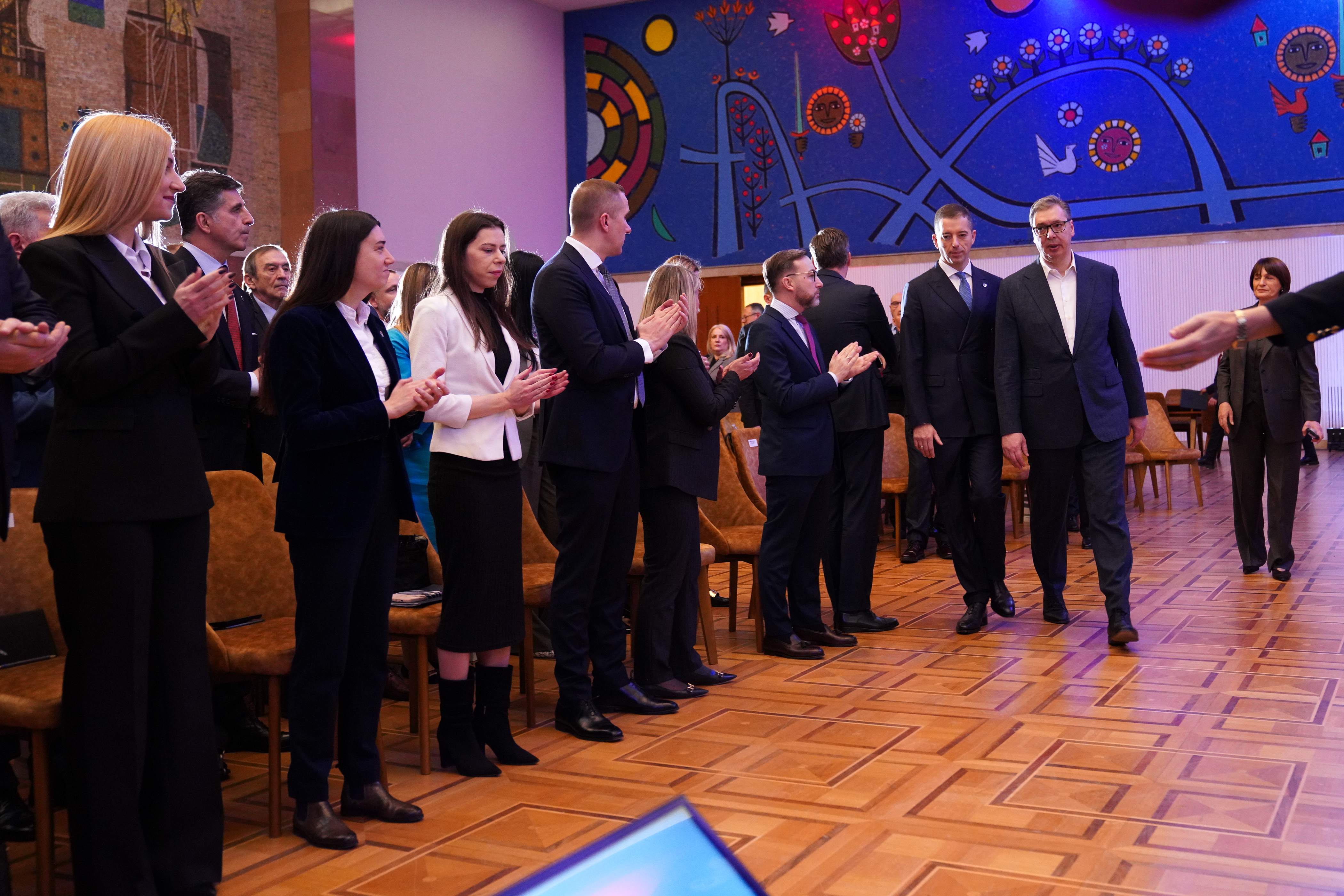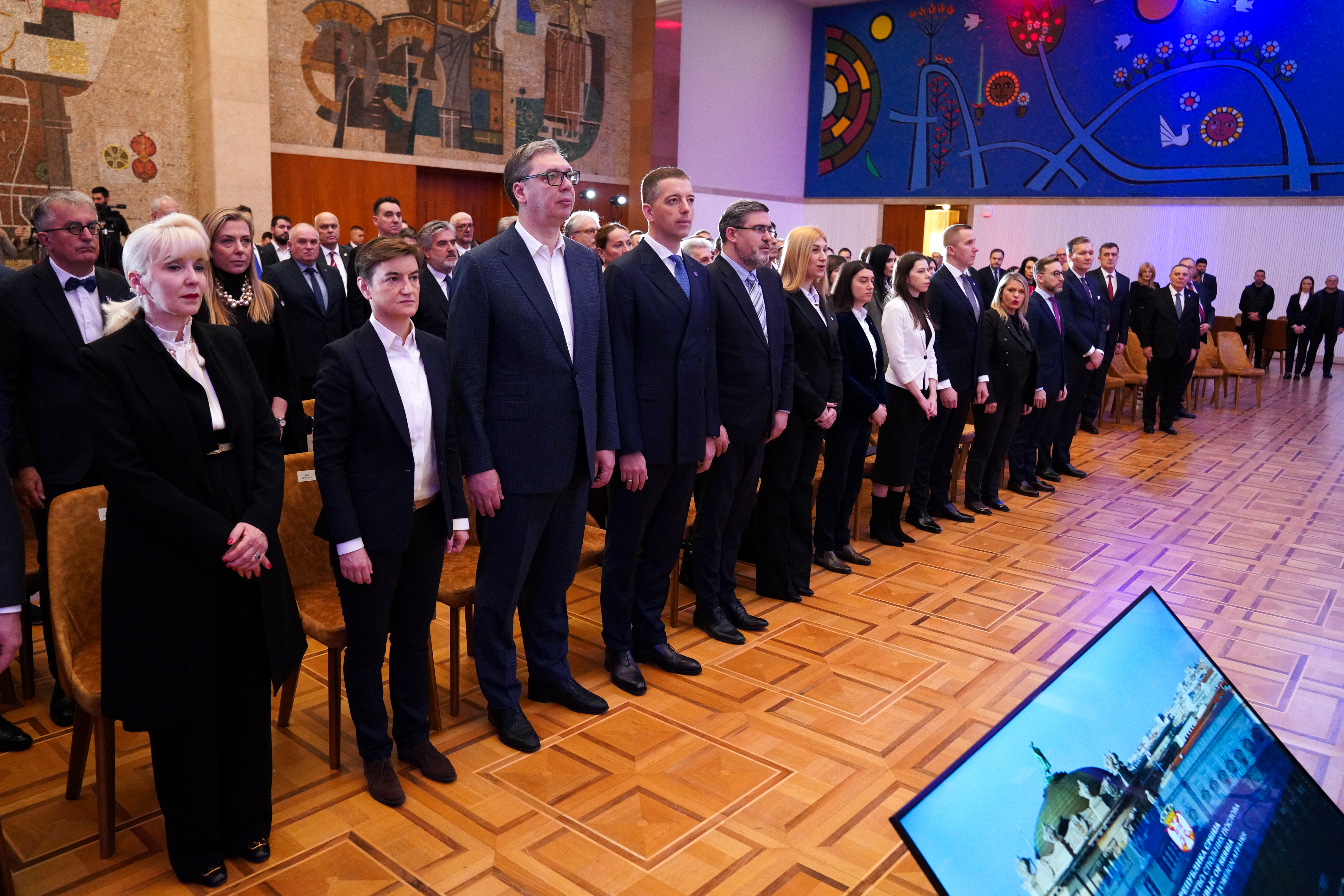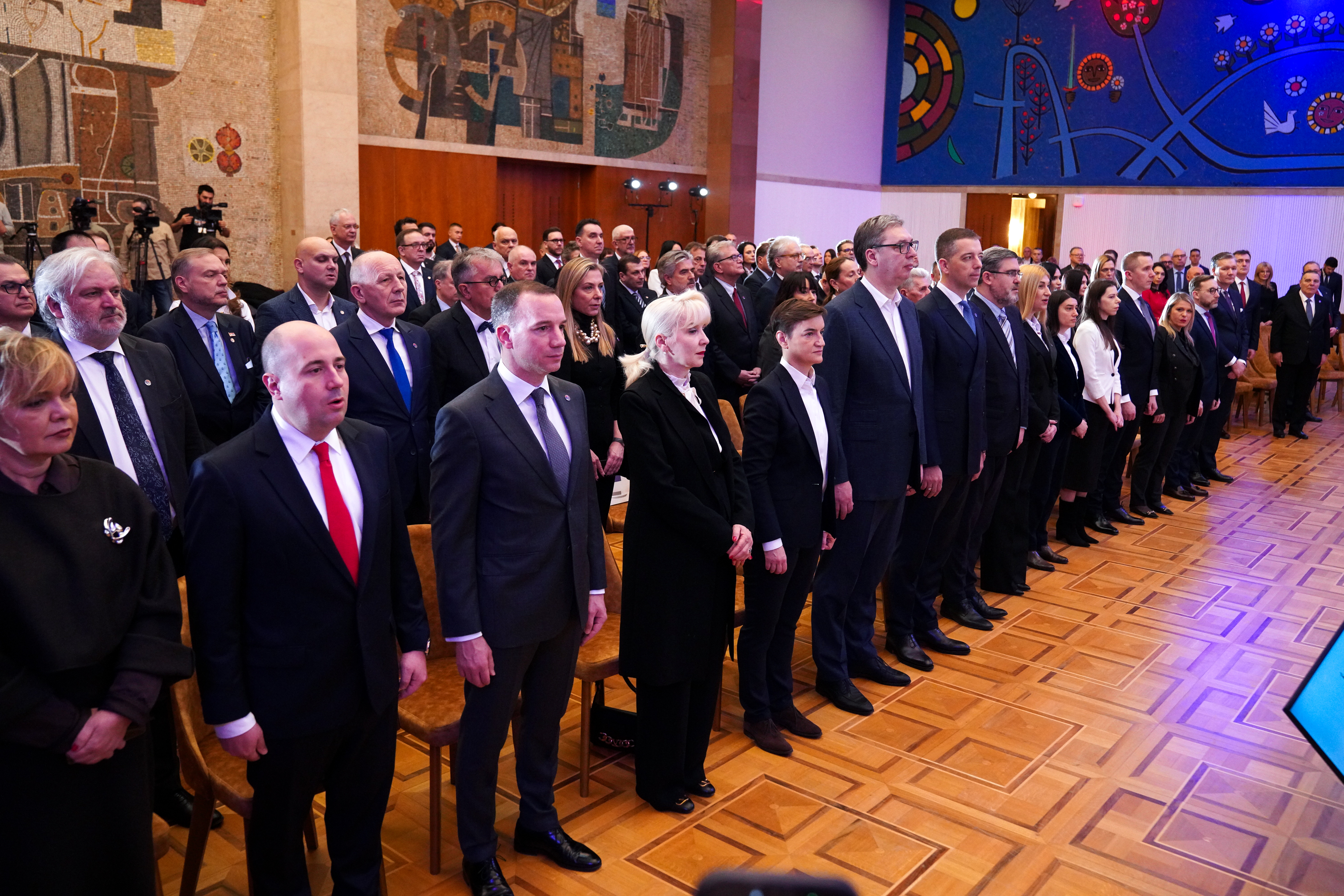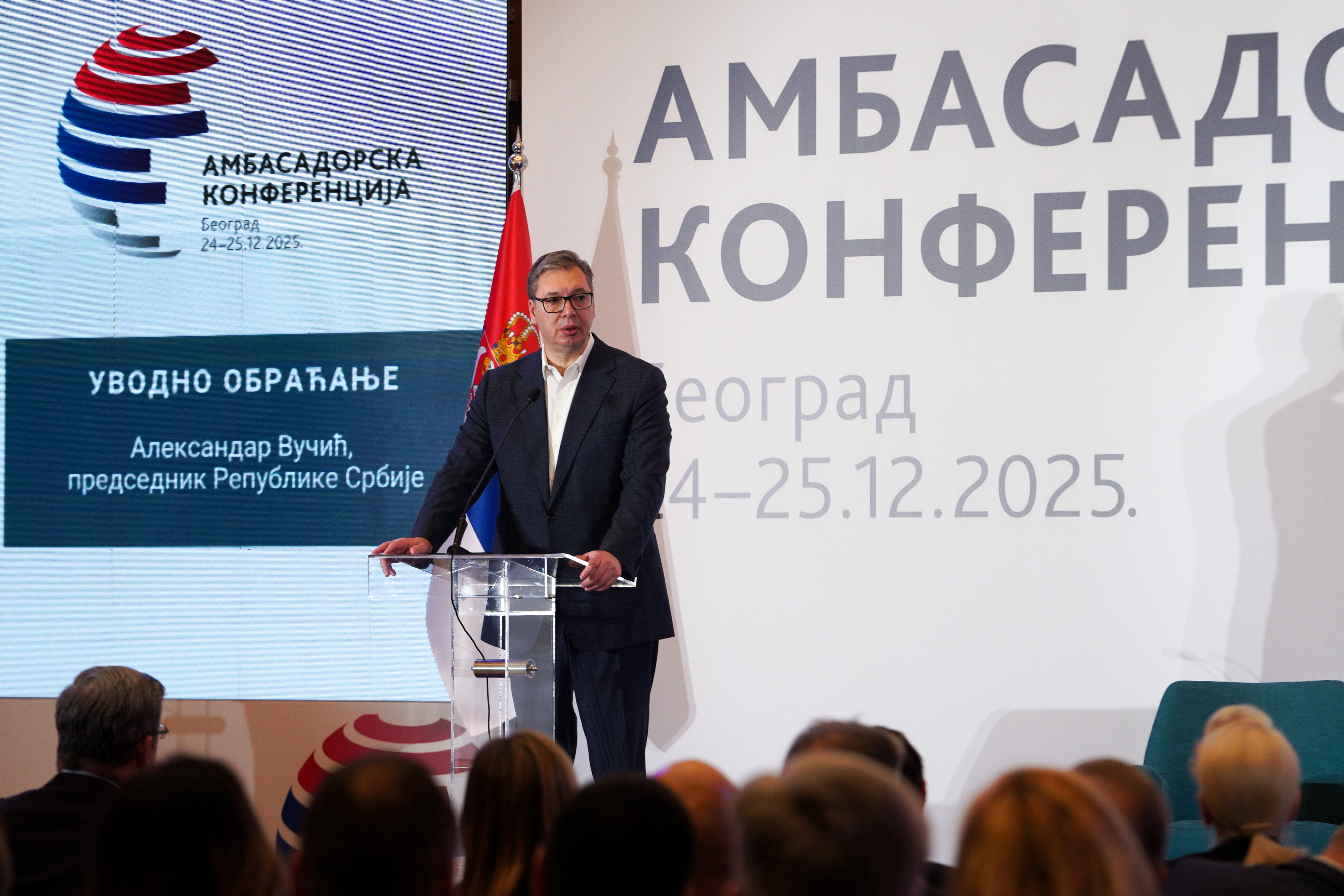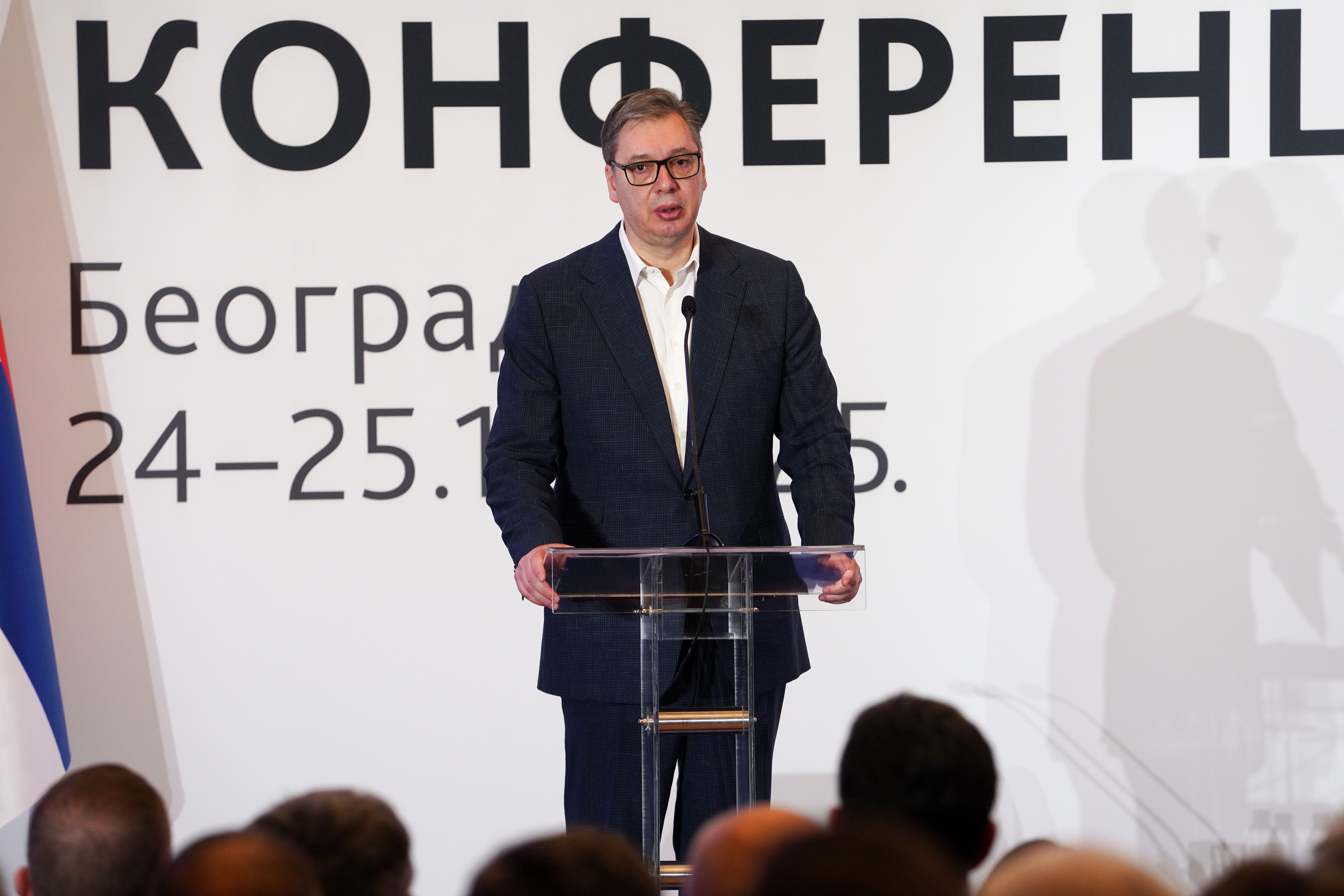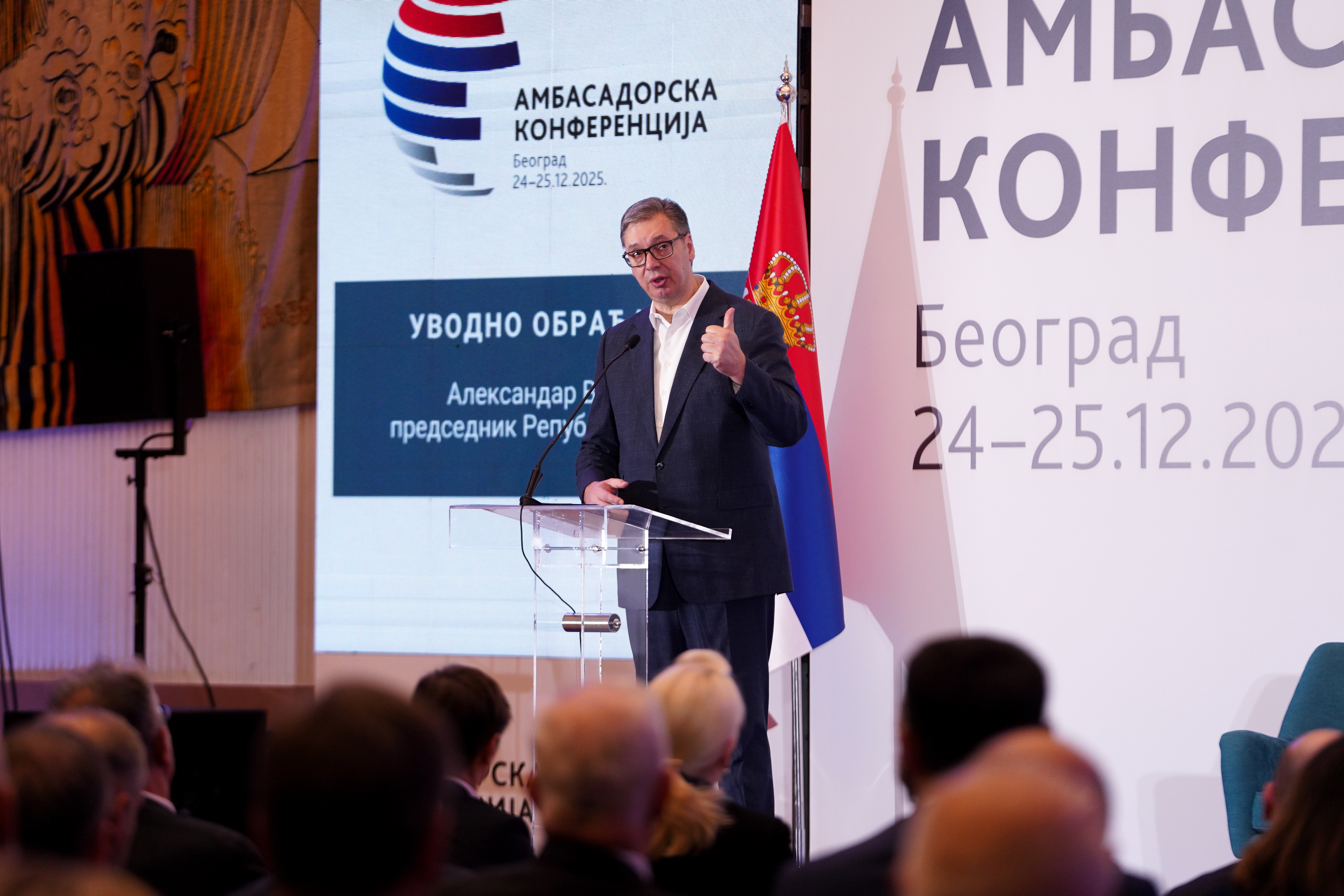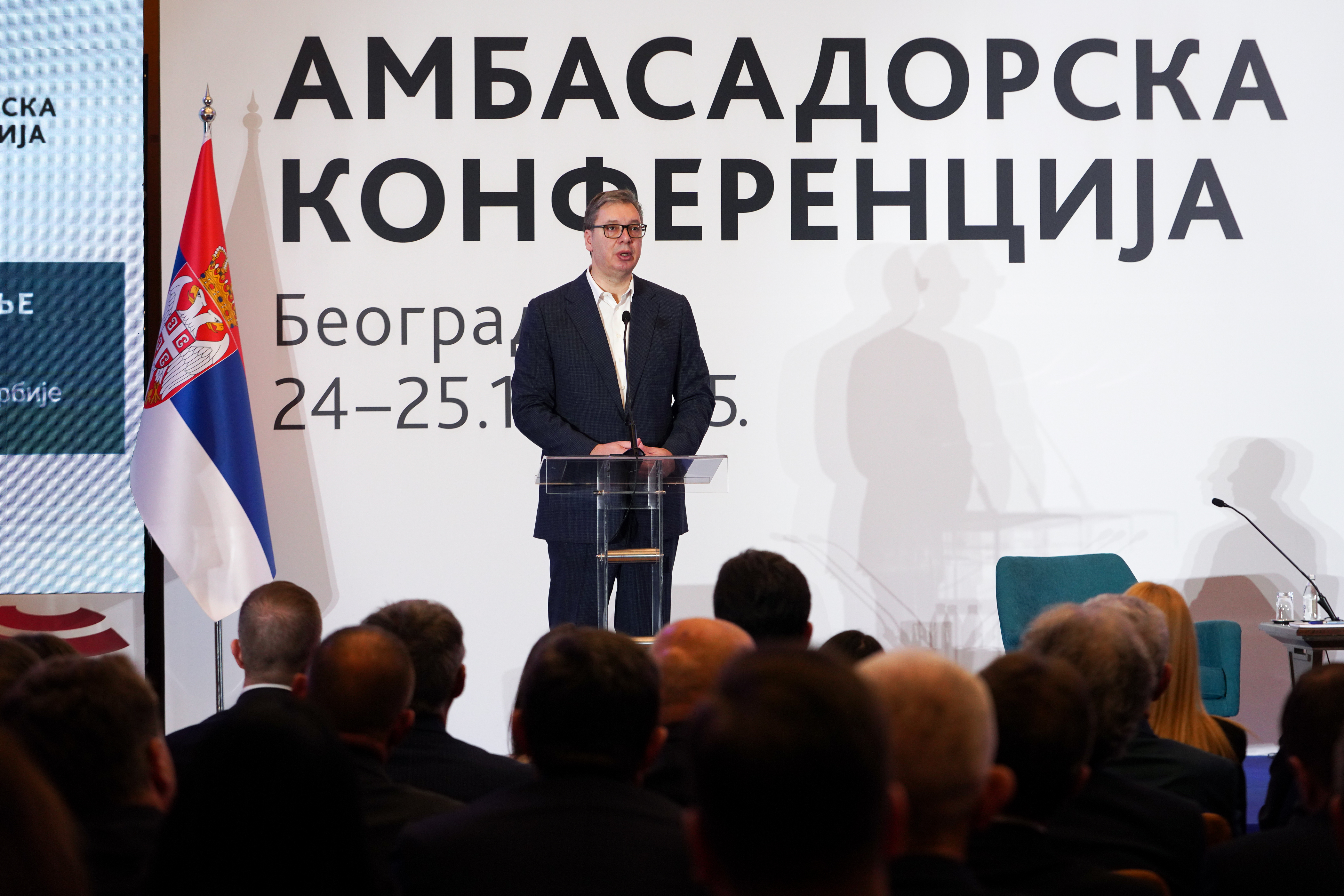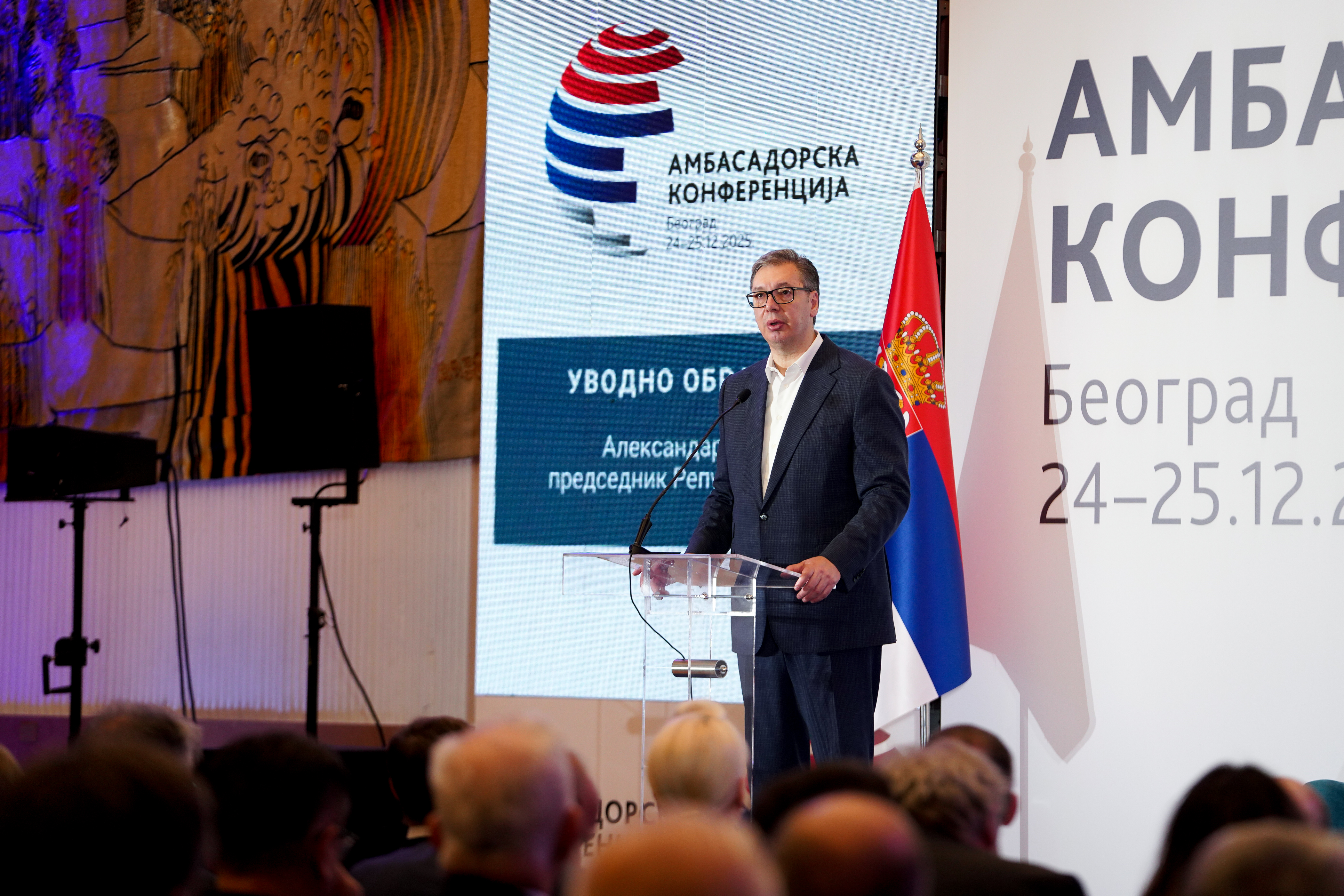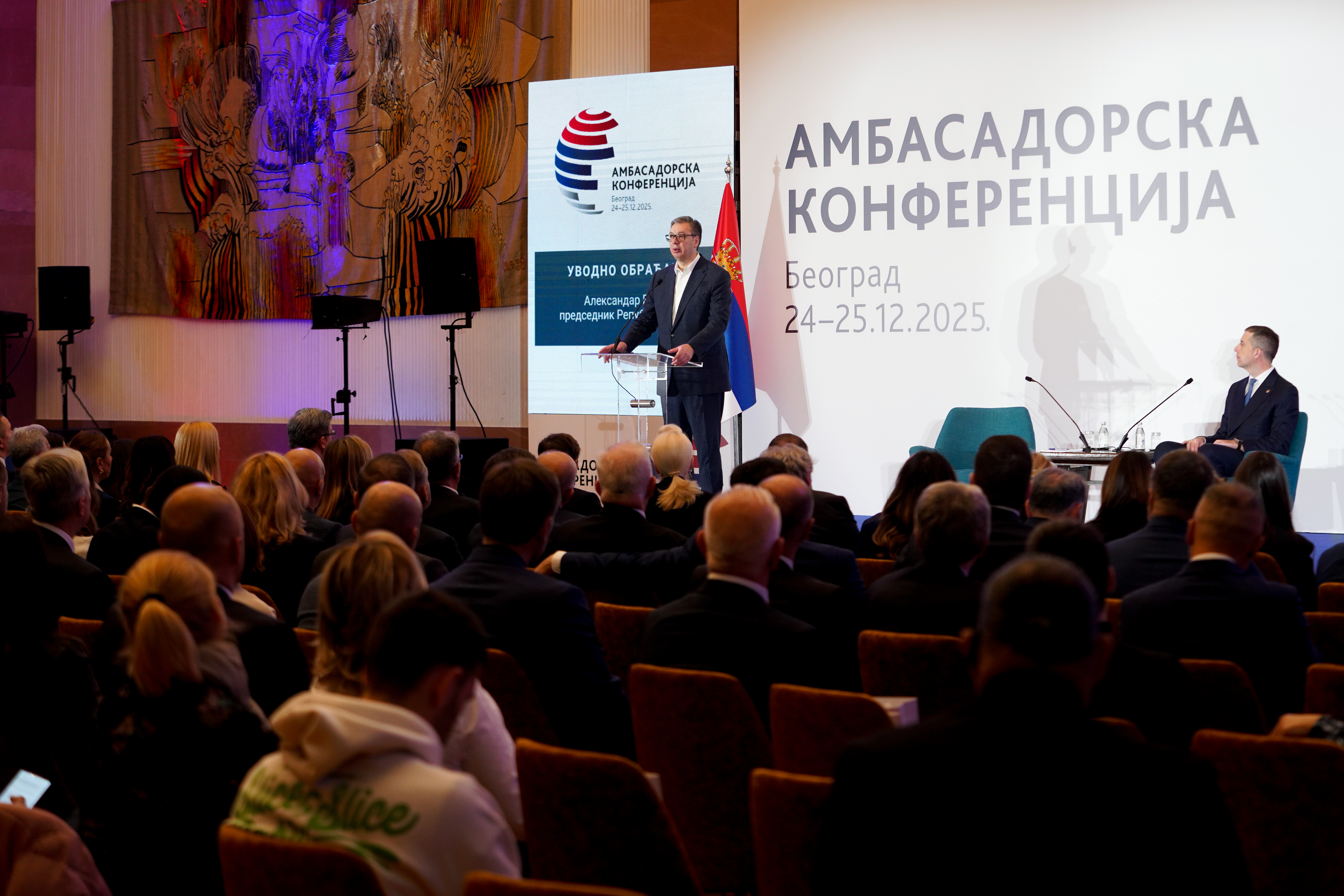

President Vučić at the Opening of the Ambassadorial Conference
“Dear ambassadors, consuls general, and heads of missions, I will try in a brief address to point out what lies ahead of us, how I see the current situation, and what we should collectively change. Major global changes are underway, and the role of state representatives in different countries and organizations is evolving. In the past, ambassadors primarily served to establish close and swift contacts. Today, that function is no longer essential. Technology, mobile phones, and other tools enable us to do this ourselves, without intermediaries. What has become increasingly important is your role in shaping policy, in terms of influencing the policies of host countries through various means,” Vučić said at the Palace of Serbia.
He added that positions of ambassador had often been the subject of intense competition in Serbia, particularly in wealthy European and other countries. He emphasized that Serbia must enhance its presence in Asia, Africa, and South and Central America, primarily because growth rates in those regions are significantly higher than in Europe and North America.
“That is where there will be increasing opportunities for our companies and for our country,” Vučić noted. He added that Serbia would also need to strengthen its embassies in the China and Japan, as well as open new embassies in Vietnam and other countries.
The President pointed out that Serbia cannot afford not to have representatives in countries with populations of one hundred million or more, stressing the importance of having opportunities for cooperation with such states.
President Vučić stated that many regional and major global actors have embarked on a new wave of recognizing the independence of the so-called Kosovo, emphasizing that Serbia will have to continue its difficult and demanding work on derecognition efforts.
Addressing Serbian ambassadors at the Conference in Belgrade, Vučić said that their duty is to implement Serbia’s policy, that they may add a personal note, but that there are clear limits which must not be crossed, and that actions must always remain in line with the Constitution of the Republic of Serbia.
“For us, Kosovo and Metohija are an inalienable part of Serbia; that has been the case and will remain so. I know it is not easy to speak about this in London, Washington, and elsewhere, but that is our position. I therefore ask that there be no debate or deviation on this issue. Otherwise, you would not be representing our policy,” Vučić stressed.
He pointed out that when it comes to Kosovo and Metohija, neither Pristina nor the major powers respect anything that has been signed so far within the framework of the Belgrade–Pristina dialogue.
Vučić added that the issue of recognizing the so-called Kosovo reflects foreign claims not only against the territory of Serbia, but also against the broader regional space.
He noted that, regarding recognitions by Sudan and Syria, the influence of Türkiye and Saudi Arabia is clear and unequivocal.
“We must be aware of this; it is completely clear,” Vučić emphasized.
Stating that Serbia has no need for and does not seek conflicts, Vučić said the country will continue to strive to maintain dialogue with all partners.
“We must continue to do our job and pursue the difficult and demanding work of derecognition,” he said, adding that certain materials exist “in our safe,” and that it is currently a question of when, and whether, they will be made public.
According to him, they had not been disclosed earlier in order to avoid offending major powers, given their significant capacity for pressure.
“There is no longer a reason for restraint. We are backed into a corner, and we will fight for what is ours and protect our interests,” Vučić stressed.
He recalled that when attempts were made at the United Nations to adopt a resolution on genocide in Srebrenica, Serbia was not even consulted, neither on participation nor on the decision itself.
“However, thanks to enormous engagement and effort, we demonstrated that a small country could resist and, in terms of votes, unexpectedly prevail over major powers,” Vučić said.
He added that this represented the first major defeat of a combined bloc consisting largely of European Union member states and the United States, despite the pressures exerted on smaller countries worldwide.
Vučić said that the most difficult objective in the period ahead would be preserving peace and stability in the country, emphasizing that this must be the paramount task of both the state and its diplomats abroad.
“Preserving peace is becoming increasingly difficult each day. The most challenging goal ahead will be to maintain peace and stability in the country,” Vučić told the ambassadors.
Referring to the global situation, he said that Serbia had expected significant progress from the U.S. administration.
“So far, we have not felt that. Whether we speak of tariffs or sanctions against NIS, none of this has served the interests of the Republic of Serbia. At the same time, when we faced difficulties, we did not receive support from other major powers, neither from the East nor from the EU,” Vučić said.
He added that major powers expected more from Serbia while offering little in return.
“We understood that message clearly. That is why we are on the European path and will remain on it. But this is a lesson: we must build our own strength, take care of ourselves, and focus on delivering as much as possible for our citizens, without seeking approval from others,” Vučić emphasized.
Turning to the conflict in Ukraine, Vučić noted that goals and messages of all sides had changed over time and that the conflict had become increasingly intense. He added that even if it were to end tomorrow—while acknowledging the efforts of U.S. President Donald Trump—the broader confrontation between Europeans and Russia would continue.
Vučić stated that significant developments related to armament and the formation of military alliances are taking place in the region, often downplayed by the countries involved.
“Suddenly, we see meetings between Pristina, Tirana, and Zagreb, which many dismiss. Why were those meetings held? Why was a cooperation agreement signed, effectively forming a military alliance? Certainly not by coincidence,” Vučić said, adding that these developments were not merely symbolic.
He stressed that the consequences are already visible, from disregard for the UN Charter and UN Security Council Resolution 1244, to the open arming of Albanians in Kosovo and Metohija by the United States and Türkiye.
According to Vučić, the delivery of weapons such as 105 mm howitzers poses a direct threat to Serbia’s territorial integrity and civilian population.
“Our task, and the task of all those engaged in politics, is to preserve peace, understand these actions clearly, and respond calmly, prudently, and patiently,” Vučić emphasized.
He concluded that as long as Serbia continues to strengthen its capacities and maintain economic growth, it cannot be endangered. Dialogue and peaceful solutions remain essential.
“Our primary goal is the preservation of peace and stability. The second is the defense of Serbia’s territorial integrity, with no deviation from the Constitution. The third is accelerating Serbia’s economic development, which requires a stronger diplomatic presence in Asia, Africa, and South and Central America, particularly in China and other Asian countries,” Vučić said.
He concluded by stressing that Serbia remains on its European path and that it is the responsibility of all Serbian diplomats to do everything possible to ensure continued progress along that path.
Source: Tanjug