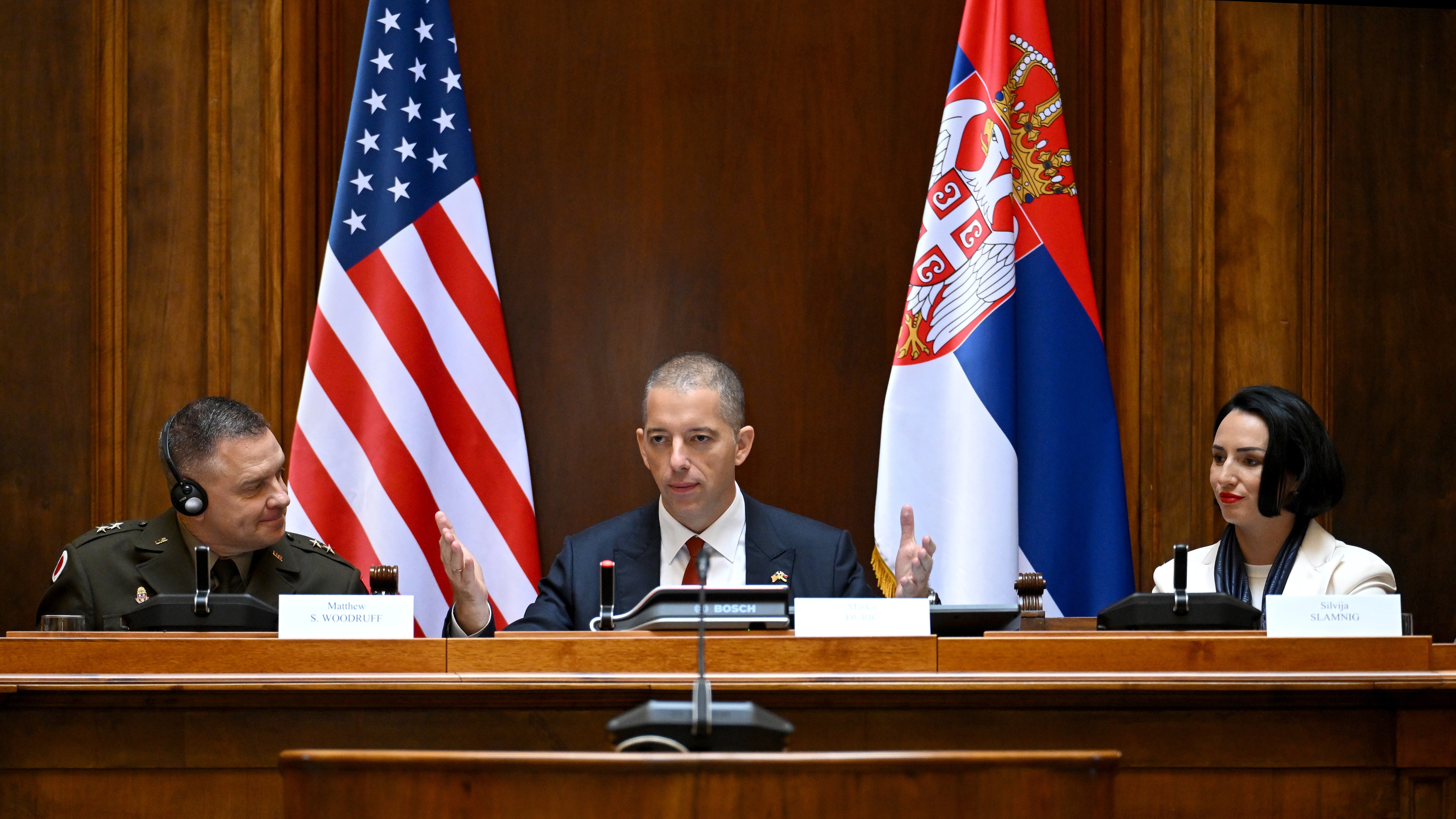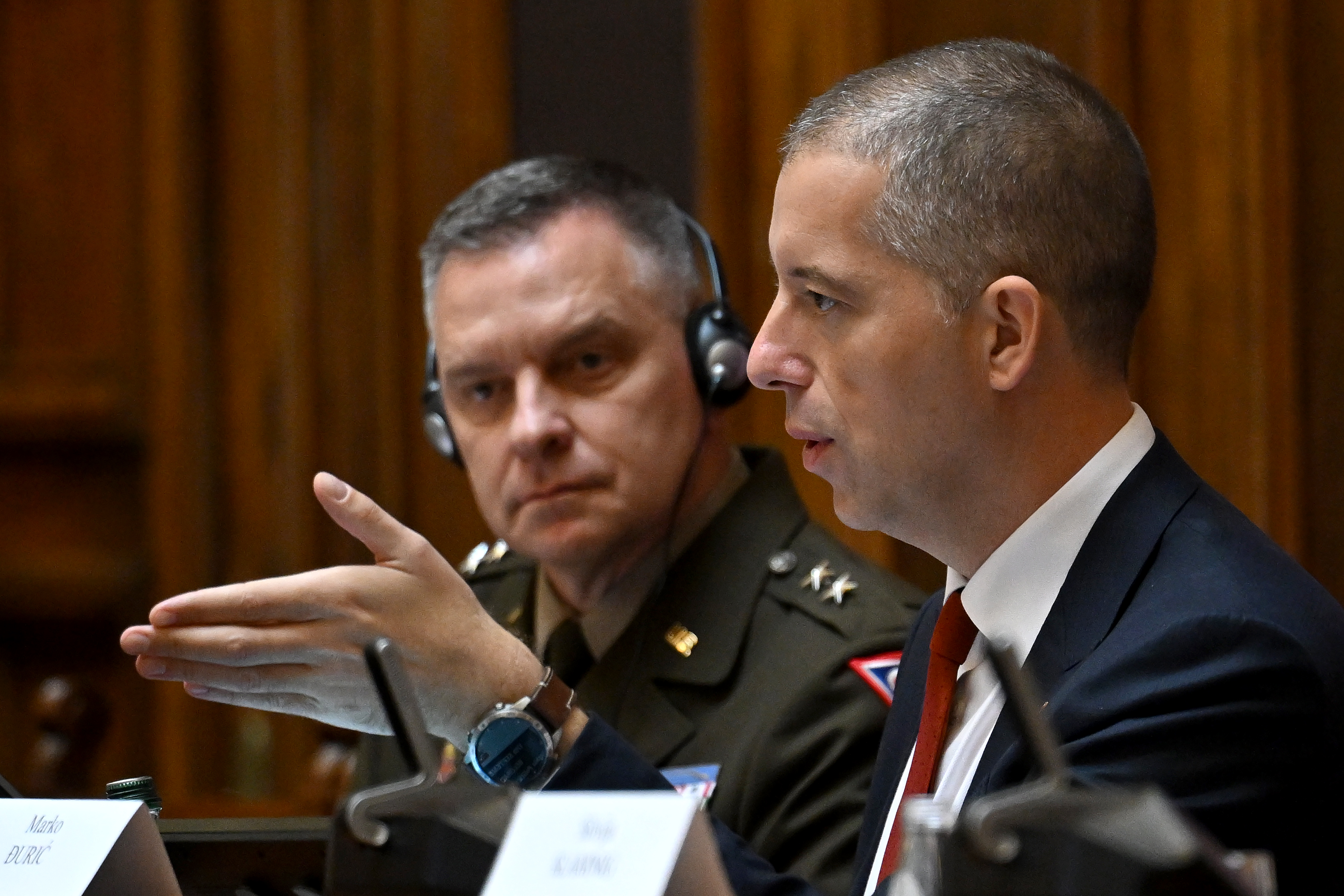

Đurić: Serbia–U.S. Partnership Is One of Our Country’s Key Development Opportunities
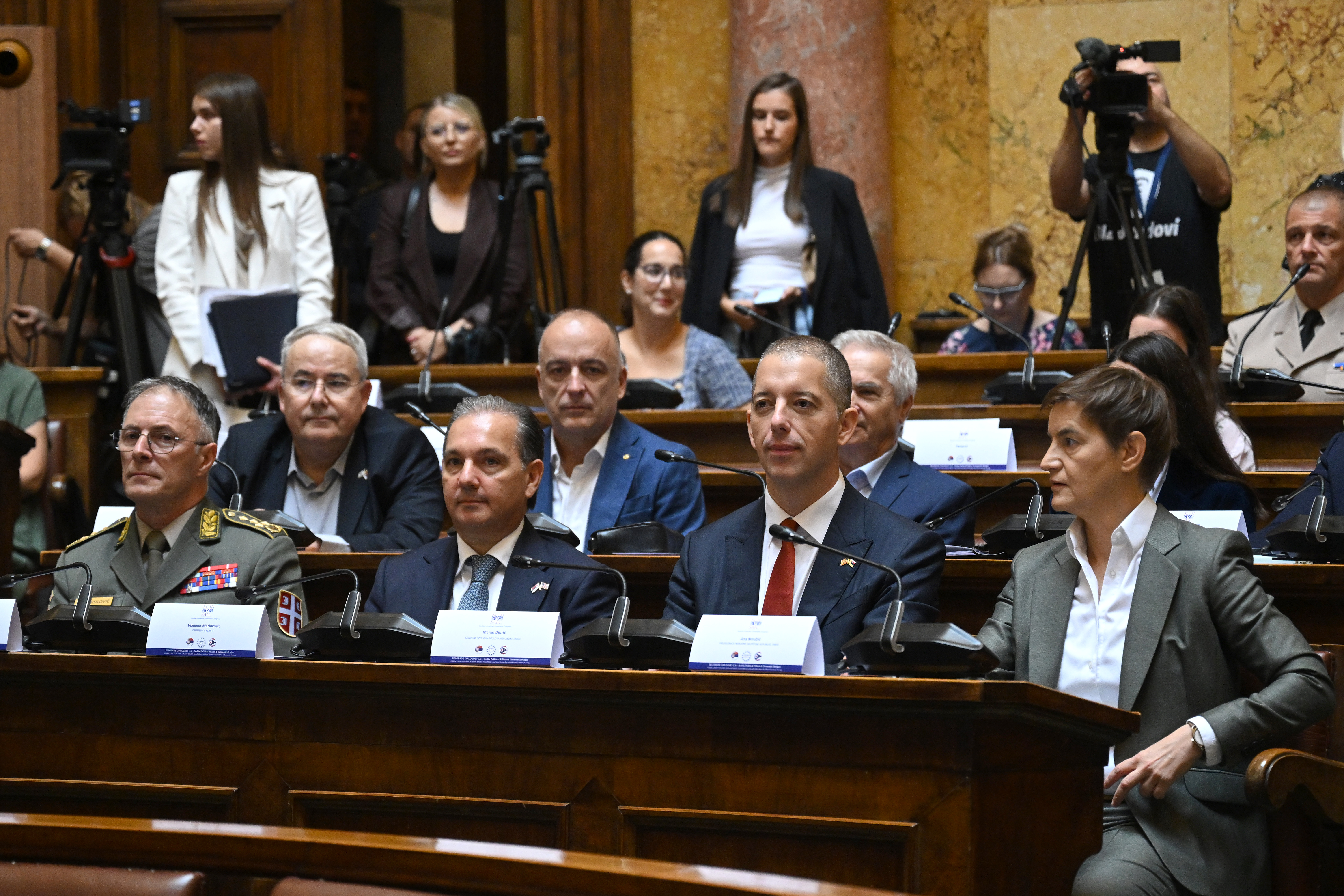
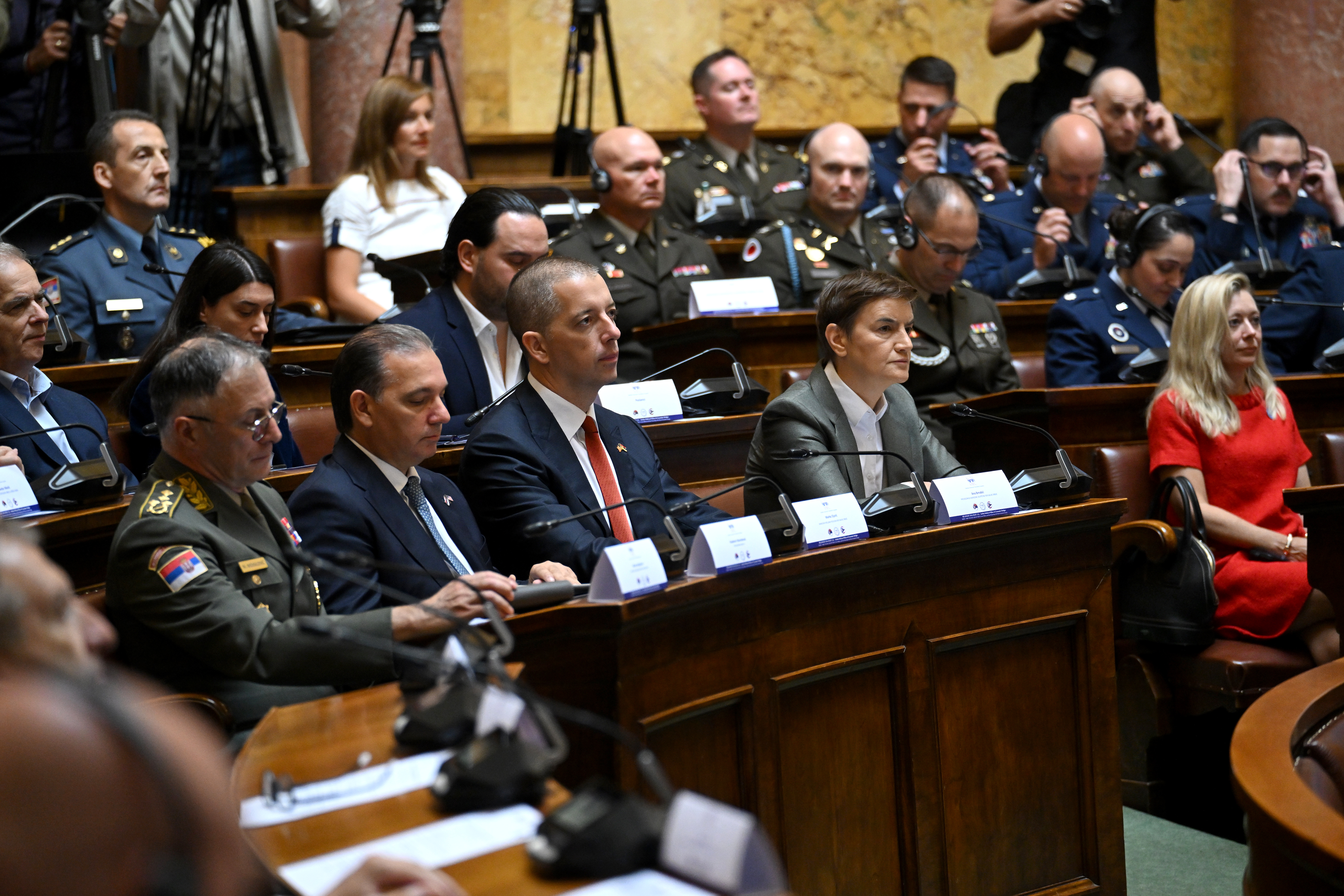
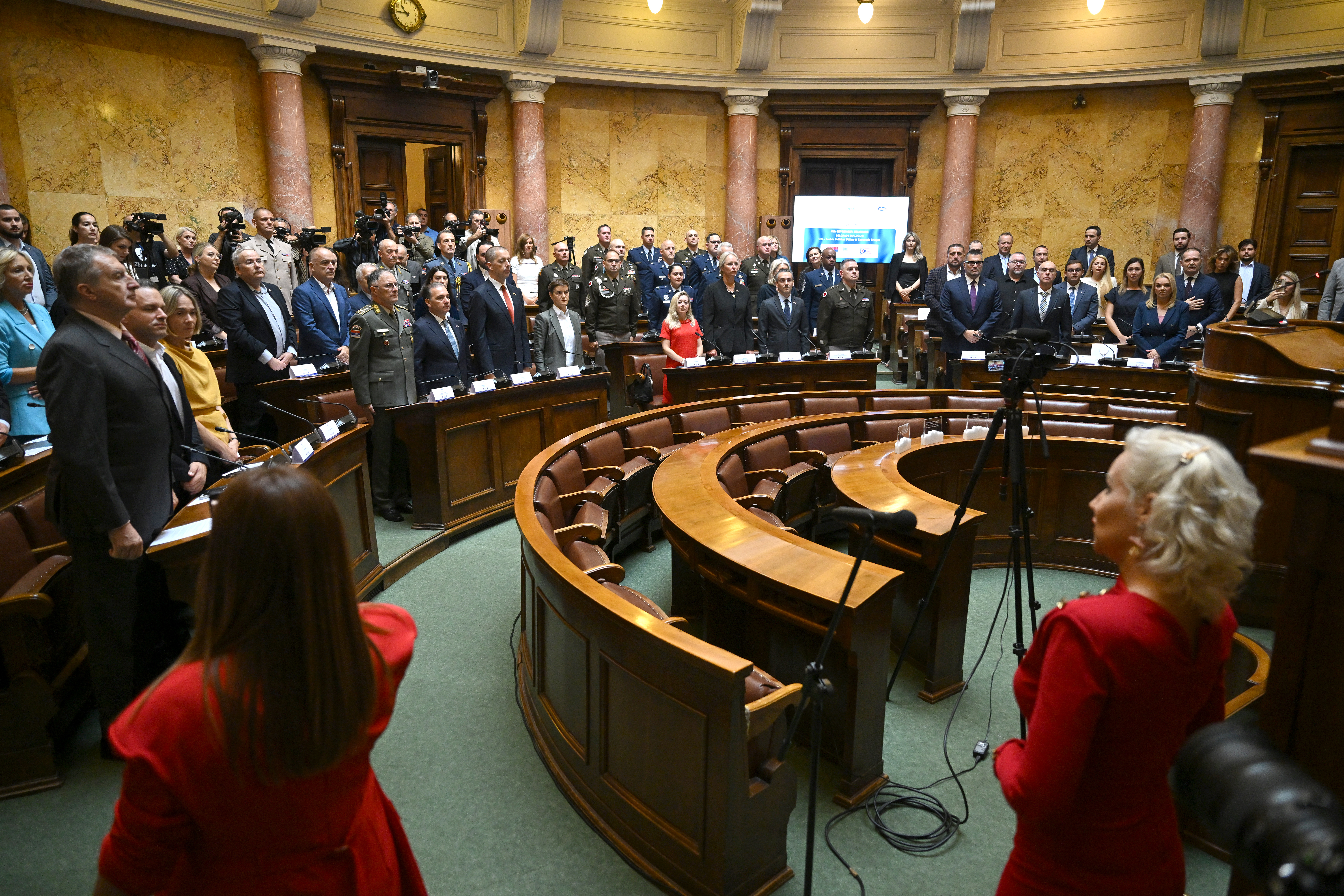
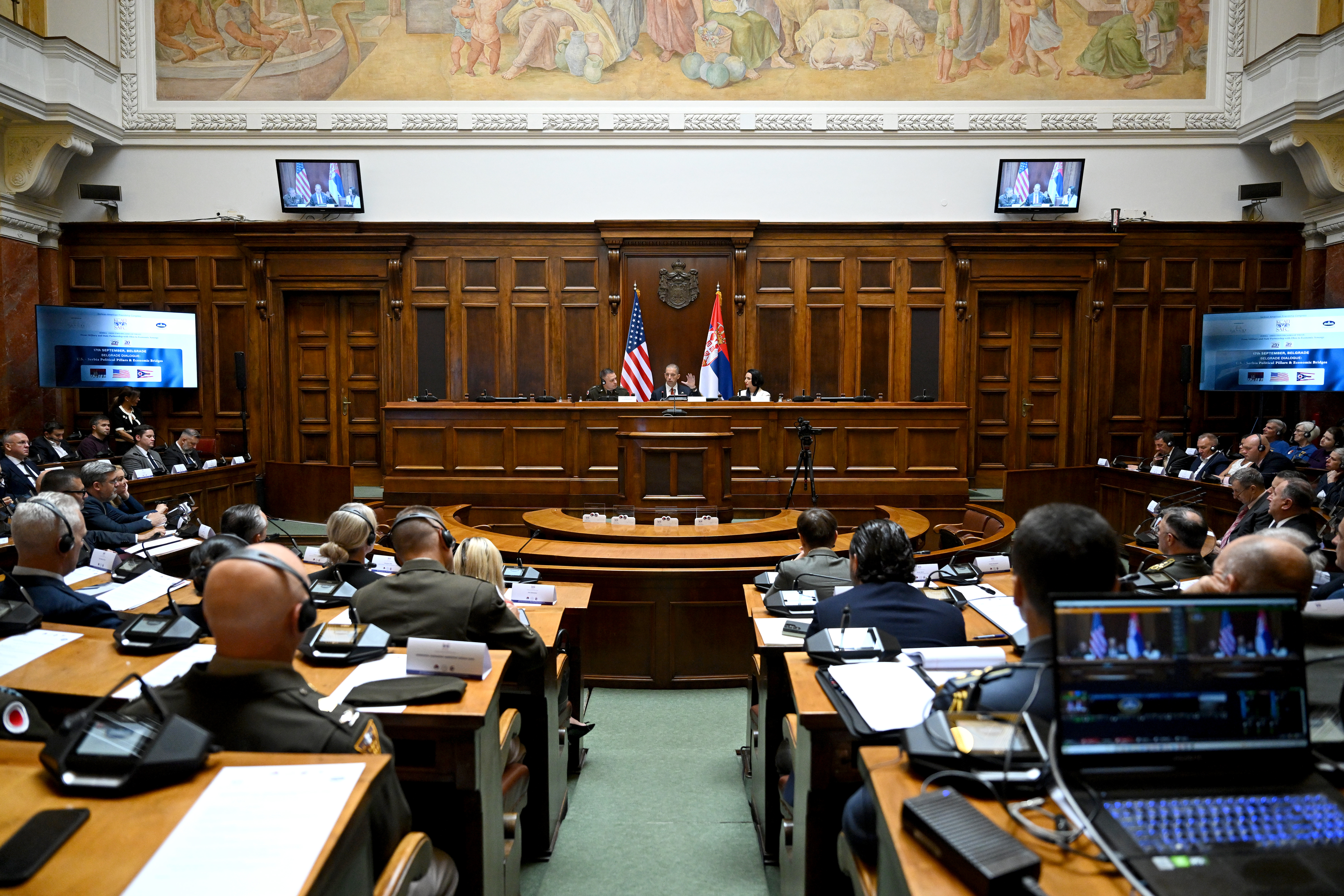
Minister Đurić noted that the presence of Serbia’s leading political, economic, military and security representatives at the observance of America Day bears testimony to the strength, capacity and potential of relations between the two countries, as well as to Serbia’s commitment to building this partnership. He emphasised that significant systemic progress has been made over the past six years under the leadership of Presidents Aleksandar Vučić and Donald Trump.
Among the most important achievements, Đurić highlighted the launch of the Serbia–U.S. Strategic Dialogue in July this year, following a series of high-level meetings involving the U.S. Secretary of State, including the meeting between President Vučić and Secretary of State Marco Rubio in September last year, as well as several meetings with the U.S. Secretary of State over the past year. According to Đurić, the Strategic Dialogue brings regularity, a systematic approach and a clear methodology to bilateral relations, including annual cooperation plans for ministries, agencies and other institutions. He noted that areas such as energy, defence, education, science, culture and the arts now have clearly defined action plans for future cooperation.
Speaking about the importance of relations with the United States, Đurić emphasised that there is no major state or national issue of importance to the Serbian people in which relations with the United States do not play a significant role. He highlighted the considerable potential for cooperation in emerging technologies, given the leading position of the United States in information technology, the broader technology sector and artificial intelligence. He also underscored the importance of the partnership for Serbia’s energy security, ranging from ensuring secure supplies of liquefied petroleum gas and oil to harnessing the potential of the Danube to increase electricity generation and applying new technologies in the energy sector.
With regard to Kosovo and Metohija, Đurić underscored the importance of Serbia’s contacts with U.S. representatives in KFOR, as well as with U.S. diplomatic missions, for protecting the position and rights of the Serbian people and all non-majority communities.
Đurić also highlighted the importance of the Serbian diaspora in the United States, recalling that approximately one million people of Serbian origin live in the country and describing them as an important bridge for building future relations. He stressed that building a partnership is an ongoing endeavour and must involve all institutions and segments of society.
Speaking about strengthening Serbia’s diplomatic presence in the United States, Đurić noted that the Government of Serbia has adopted the relevant decision and completed all procedures in preparation for the opening of a new Consulate General of Serbia in Miami, Florida, one of the fastest-growing economic regions in the United States. He highlighted the importance of Serbia’s missions in Washington and New York, including the Permanent Mission to the United Nations and the Consulate, as well as the Consulate General in Chicago, which serves a community of several hundred thousand people of Serbian origin. According to Đurić, diplomatic missions serve as important gateways for both Serbian citizens and the business community, while some major projects, including those in the energy sector, established their initial contacts with partners precisely through diplomatic missions. He added that Serbia must continue to strengthen the capacities of its missions, while commending the work of the U.S. Embassy in Belgrade and its day-to-day engagement in implementing joint projects.
Turning to economic cooperation, Đurić highlighted the potential for Serbia–U.S. cooperation in third markets, given Serbia’s well-developed networks of cooperation in Africa, Asia and other parts of the world. Citing the partnership between Serbia and Angola as an example, he noted that the diversity of Serbia’s cooperation networks constitutes one of its comparative advantages. At the same time, Serbian companies undertaking major projects in third markets often require additional capacities and partners, which they can find in the United States.
Đurić also outlined his vision of Serbia by 2031 as an economically and technologically significantly stronger country, one of the strongest economies in this part of Europe and one of the most technologically advanced countries on the continent, fully harnessing the potential of emerging technologies and economic transformation. He recalled that Serbia has increased its gross domestic product two-and-a-half-fold in just over a decade, which, in his assessment, demonstrates Serbia’s potential as a partner. In this context, he underscored the central role of the partnership with the United States in achieving Serbia’s national plans and objectives, expressing the expectation that, by 2031, good relations between the two countries will be firmly established as a matter of course, enabling joint planning and policy coordination in the fields of the economy, security and other areas.
Đurić particularly highlighted cooperation in education and the new agreement providing for a significant increase in the number of Fulbright scholarships, signed in July as a joint investment by the Governments of Serbia and the United States. He expressed his expectation that, in the years ahead, a growing number of young Serbian scholars and intellectuals will have the opportunity to pursue further academic development at leading U.S. universities, emphasising that the American higher education system represents a major opportunity for Serbia.
Speaking about Serbia’s accession to the Artemis Accords, Đurić explained that, although Serbia does not have a space programme of its own, accession opens up significant opportunities for Serbian research institutes, industry and companies to participate in the development of a space programme worth tens of billions of dollars, while also enabling Serbian experts to develop their expertise and grow alongside the sector.
Đurić concluded that all of these areas represent only part of what Serbia and the United States can achieve together in the future, noting that the partnership between the two countries constitutes one of Serbia’s key development opportunities. He thanked the Ohio National Guard delegation, reaffirming that Serbia will continue working to further advance bilateral relations and broaden the base of support for the Serbia–U.S. partnership.